

In a world where technology changes almost overnight, a fine Swiss watch represents
something increasingly rare: an object created to be owned, worn, maintained and
appreciated for decades.
Buying a Swiss watch is therefore about much more than knowing the time. It is an
investment in mechanical craftsmanship, distinctive design, engineering, materials and a
centuries-old culture of watchmaking. For some collectors, carefully selected watches can
also retain meaningful value over time, although no watch should be considered a
guaranteed financial investment.
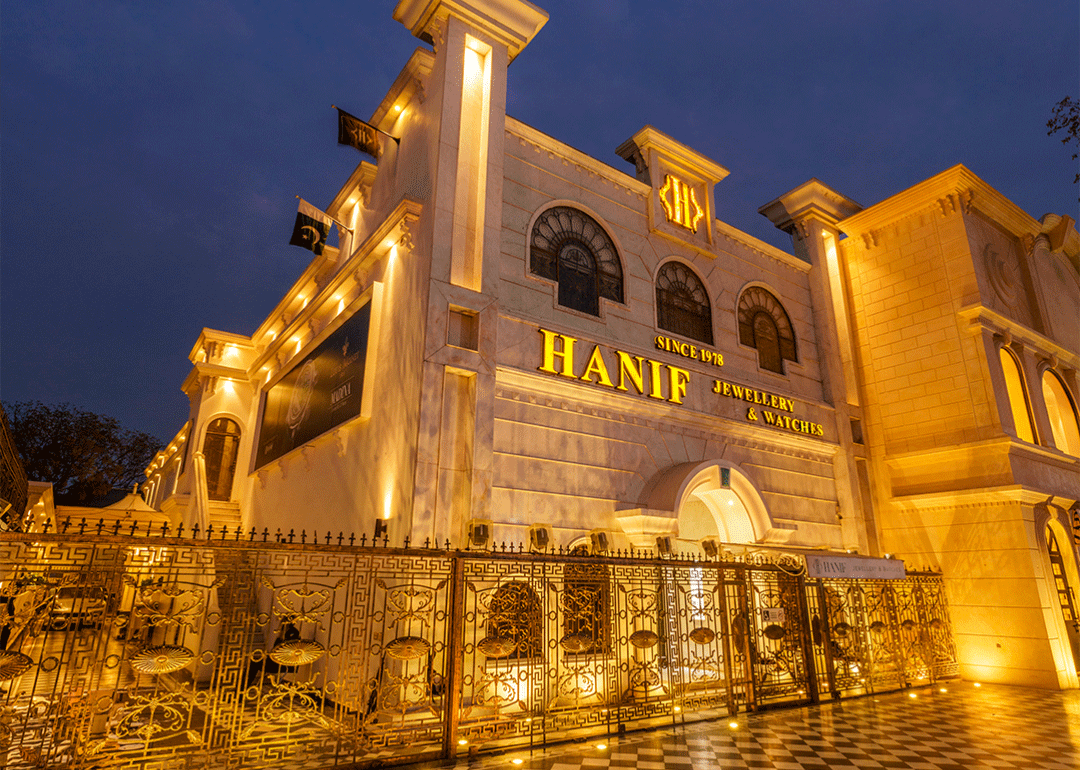
At HANIF, watch enthusiasts can explore a diverse selection of renowned Swiss names,
ranging from independent haute horlogerie maisons to internationally recognised
watchmakers. Each offers a different interpretation of Swiss watchmaking, allowing
collectors to choose pieces that reflect their individual taste, lifestyle and appreciation of
mechanical art.
https://www.hanifjewellers.com/products/golden-bridge-b34113sz18g
What Makes Swiss Watches Different?
The words Swiss Made carry considerable significance in the watch industry. The
designation is protected through Swiss legislation governing watches and watch
movements, making it more than simply a phrase placed on a dial.
Yet the attraction of Swiss watches extends far beyond their place of manufacture.
Switzerland has developed an ecosystem where traditional watchmaking skills exist
alongside advanced engineering, precision manufacturing and contemporary material
development. Some manufacturers specialise in complicated mechanical movements, while
others distinguish themselves through unusual cases, hand-finished dials, chronographs,
ceramics or limited-production creations.
Franck Muller, for example, describes its watchmaking around complications, in-house
capabilities and traditional Swiss techniques. Its celebrated Aeternitas Mega contains 36
complications and 1,483 components, illustrating just how technically ambitious mechanical
watchmaking can become.
That level of mechanical thinking is one reason a fine watch can remain fascinating long
after the initial purchase.
- Swiss Watches Are Made for Long-Term Ownership
Most consumer technology is eventually replaced. Mechanical watches follow a very
different philosophy.
A quality mechanical movement is built from interacting components such as gears, wheels,
springs, bridges, jewels and oscillating systems. Instead of becoming obsolete because a
new operating system has arrived, a properly maintained mechanical watch can continue
functioning for generations.
This gives the watch a different relationship with its owner.
The marks acquired through years of wear, the occasions on which it was worn and the
people to whom it may eventually be passed can all become part of its history.
A Swiss watch purchased to celebrate a wedding, professional achievement, anniversary or
personal milestone may eventually have a significance that is impossible to express through
its original purchase price alone. - Mechanical Craftsmanship Has Lasting Appeal
One of the strongest reasons collectors continue to appreciate Swiss watches is the
mechanical work hidden inside them.
Some watches may appear beautifully restrained from the outside while containing
extremely sophisticated movements underneath. Others intentionally expose their
mechanics through open-worked or skeletonised designs.
Independent manufacturers often take this even further.
Chronoswiss, for example, states that its watches are hand-assembled in its Lucerne atelier
and highlights in-house guilloché and enamel work alongside specialised mechanical
complications.
Traditional guilloché itself requires patterns to be mechanically engraved into surfaces with
specialised equipment, turning the dial into an important part of the craftsmanship rather
than simply a printed display.
This combination of engineering and decorative skill helps explain why serious watch
collectors frequently view mechanical watches as miniature works of functional art. - A Swiss Watch Can Hold Value Beyond Its Function
A smartphone tells time more accurately than almost any mechanical wristwatch, but
accuracy alone is not why collectors purchase fine watches.
They value the complete object: its movement, manufacture, design, scarcity, provenance
and identity.
The growing international market for pre-owned watches also demonstrates that a watch
does not necessarily lose all relevance when its first owner decides to part with it. Deloitte’s
2025 Swiss Watch Industry Study identified the pre-owned segment as an increasingly
important part of the industry, with consumers particularly attracted by affordability and
access to distinctive or discontinued models.
That does not mean every Swiss watch will appreciate.
Value depends heavily on the individual reference, brand, demand, condition, originality,
production volume, documentation, service history and broader collector market.
The better way to think about a Swiss watch is as something that can preserve a degree of
desirability while continuing to provide years of personal enjoyment. - Limited Production Can Increase Collectability
Scarcity plays an important role in collecting.
Certain independent Swiss manufacturers deliberately create watches in very restricted
quantities. This means enthusiasts may own something encountered only rarely outside
specialist collections.
Louis Moinet, for example, describes its contemporary approach around limited editions
and unique pieces, combining unusual materials with complex mechanical watchmaking.
The maison also draws inspiration from watchmaker Louis Moinet’s historical work on the
chronograph while continuing to produce technically ambitious contemporary creations.
Limited availability alone does not automatically create investment value. However, when
scarcity is accompanied by distinctive design, mechanical credibility and collector demand, it
can contribute significantly to long-term desirability. - Materials Are Selected for More Than Appearance
Another reason quality Swiss watches age differently from ordinary accessories is their
choice of materials.
Watchmakers work with stainless steel, titanium, precious metals, sapphire crystal,
ceramics, carbon composites and numerous specialised alloys.
Different materials serve different purposes.
- Great Watches Carry Recognisable Design DNA
A valuable luxury object should have identity.
Collectors are often drawn toward watches they can recognise from across a room, whether
through a case silhouette, dial architecture, crown, chronograph mechanism, numerals or
unusual complication.
Franck Muller’s tonneau-shaped creations and expressive numerals demonstrate how a
watch can become recognisable without following the conventional round-watch formula.
Graham takes another distinctive direction. The independent company manufactures
watches in La Chaux-de-Fonds and is particularly associated with bold chronographs. Its
Chronofighter collection, for example, uses a highly recognisable chronograph trigger
mechanism. - Independent Swiss Watchmaking Offers Something Different
Some of the most interesting watches today come from independent manufacturers.
Rather than designing for the broadest possible audience, independent maisons can explore
unusual complications, materials, colours, case constructions and artistic concepts.
That is why collectors increasingly pay attention not only to the world’s largest watch
companies but also to specialist names with clear watchmaking identities.
At HANIF, enthusiasts can discover manufacturers such as BOVET, Franck Muller, Corum,
Artya , Louis Moinet, Favre Leuba , Chronoswiss, Maurice Lacroix, Cuervo y Sobrinos ,
Perrelet, Louis Erard, Armand Nicolet and EPOS, Rado, Tissot, alongside widely recognised
Swiss names including Swiss Military by Chrono, Graham as well as watch collections from
Versace and Ferragamo.
- Swiss Watches Can Become Personal Assets
Financial value is only one type of value.
A watch can become closely connected with a person’s identity.
It may be the watch worn during an important business meeting, a wedding, a graduation or
the birth of a child. Years later, the same piece may be given to the next generation with those memories attached to it.
https://www.hanifjewellers.com/products/aikon-ai1118-pvy03-130-1
Few modern products are designed with that kind of ownership cycle in mind. Mechanical watches are particularly suited to this because they can be maintained rather than simply discarded when something requires attention. Instead of asking only, “How much is this watch worth today?”, it can be more meaningful to ask:
“Will I still want to own this watch twenty years from now?”
For a carefully chosen Swiss watch, the answer can easily be yes.
9. The Secondary Market Has Strengthened Watch Collecting
Another important development is the increasing maturity of the pre-owned watch market. Deloitte’s latest industry research shows that pre-owned watches have become an important buying category rather than a niche reserved exclusively for experienced collectors. Access to watches that are no longer produced is one of the motivations attracting buyers to this market. This gives certain watches a life well beyond their original retail cycle.
10. The Right Watch Can Build the Beginning of a Collection
Many collectors remember their first serious watch. It becomes the reference point against which future purchases are considered. The next watch might introduce a chronograph. Another may feature an unusual case. The next could explore independent watchmaking, precious metals, skeletonised mechanics or artisanal dial work. Gradually, a collection develops its own personality. Experiencing the watch personally remains an important part of choosing correctly.
How to Choose a Swiss Watch as an Investment
If long-term ownership matters to you, look beyond the logo on the dial. Consider the manufacturer’s watchmaking credentials, the movement, originality of the design, quality of materials, production volume, serviceability, condition and documentation. Most importantly, consider whether the watch genuinely appeals to you. Buying a strong watch that you genuinely enjoy creates value even if its market price never dramatically increases. If it eventually becomes more collectible, that is an additional benefit.
https://www.hanifjewellers.com/products/medusa-eclipse
Why Purchase Your Swiss Watch from HANIF?
A fine Swiss watch deserves an equally considered purchasing experience. HANIF brings together established Swiss watchmakers, independent maisons and distinctive watch collections under one destination, giving customers the opportunity to explore different levels of mechanical watchmaking and design. Whether you are looking for the bold character of Franck Muller, the artistic rarity of Louis Moinet, the mechanical personality of Chronoswiss, the chronograph-focused approach of Graham, the innovation of Rado, or another Swiss name from the HANIF portfolio, the objective should be to find a watch that fits both your wrist and your personal story. For an experienced collector, that could mean discovering an unusual addition to an existing collection. For a first-time buyer, it could mean selecting the watch that begins one.
Final Thoughts: Are Swiss Watches Worth the Investment?
For the right buyer, absolutely. But the greatest value of a Swiss watch is not necessarily measured by how much someone else may pay for it in the future.
Its real strength comes from the combination of mechanical craftsmanship, distinctive design, quality materials, long-term serviceability, collectability and personal significance.
Some watches may retain significant market value. Certain rare references may even become more desirable over time. Others will primarily reward their owners through decades of use and enjoyment.
Either way, a carefully selected Swiss watch offers something increasingly difficult to find in modern luxury: an object that becomes more personal the longer you own it.
Explore Swiss watches at HANIF and discover a timepiece created not simply for today, but for years of ownership, appreciation and collecting.


